The Fathers of Radio: Lee De Forest
In the first article of our ‘Fathers of Radio’ series, we will be talking about Lee De Forest, one of the pioneers of modern broadcasting who made a significant contribution to the development of radio broadcasting and who made the first radio broadcast in 1910.
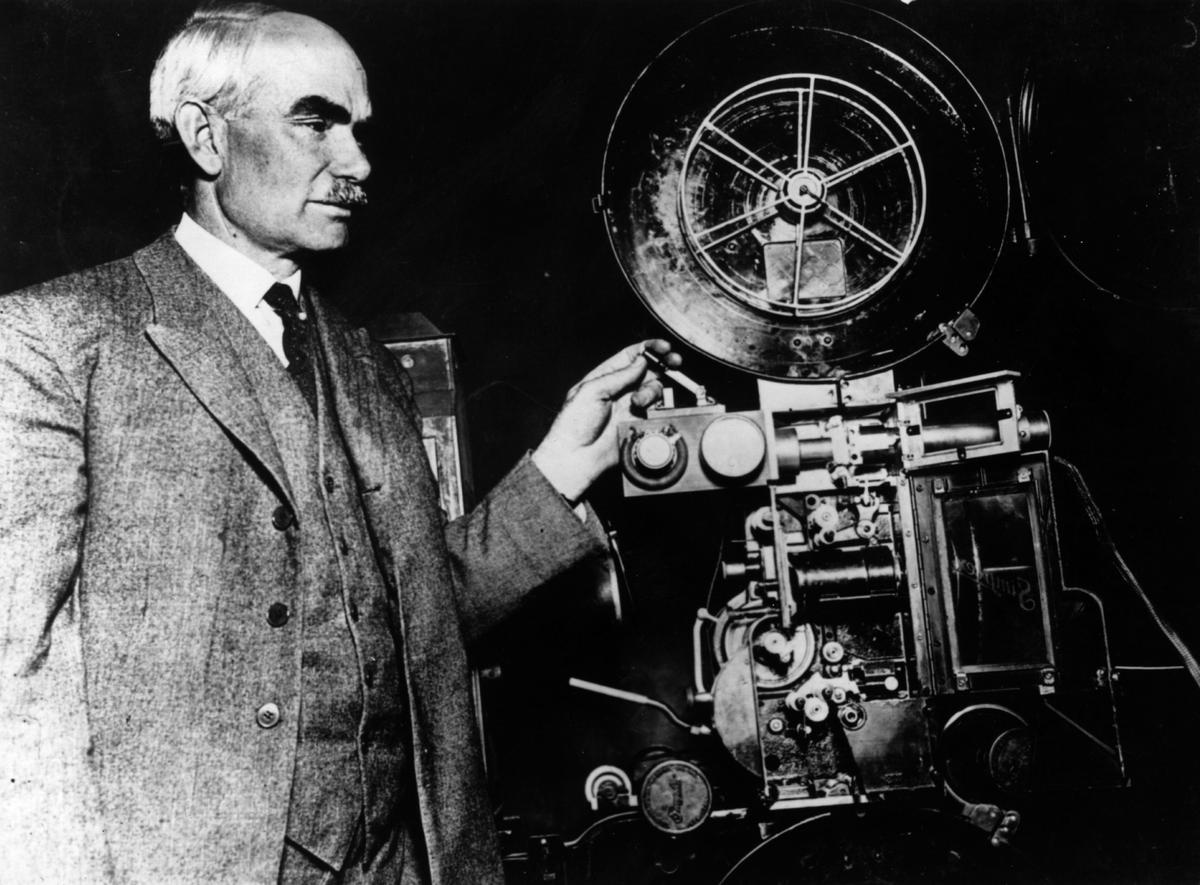
At the 30th-anniversary reunion in 1926, Yale University decided to award Lee De Forest an honorary doctorate. The rationale for the decision included the following statements:
“Dr De Forest is one of the greatest wizards in the romantic realm of modern science; he has contributed to making the age in which we live a veritable age of miracles.” This romantic wizard, who also completed his doctorate at Yale, at the Yale Sheffield School of Science, was one of the fathers of radio.
In the first article of our ‘Fathers of Radio’ series, we will be discussing Lee De Forest, one of the pioneers of modern broadcasting who made a significant contribution to the development of radio broadcasting and conducted the first radio broadcast in 1910.
It is worth noting that radio, which was introduced to us as a ‘warm’ means of communication, was not invented by a single person. From Hertz, who discovered electromagnetic waves, to Marconi, who achieved the first long-distance wireless communication; from Sarnoff, who transformed radio broadcasting into an industry, to Reith, who shaped radio culture through the public broadcasting model he established – there are many names worth remembering. And in this first article, we begin by paying tribute to Lee De Forest, who went down in history as the person who made the first radio broadcast, and getting to know him a little better...
Lee De Forest was an American scientist who invented the Audion vacuum tube—a fundamental component of radio, telephone, radar, television and computer systems—until the invention of the transistor in 1947. He was born in 1873 in Council Bluffs, Iowa, and grew up in Alabama.
Let’s take a brief look back…
Lee, who had shown a keen interest in machines from childhood, had already become an enthusiastic inventor by the age of 13, creating mechanical devices such as a small blast furnace, a locomotive and a working silver-plating apparatus… In 1893, he enrolled at the Sheffield School of Science at Yale University, one of the few institutions in the US at the time offering advanced scientific education. During this period, he began to take an interest in research on the propagation of electromagnetic waves, particularly the work carried out by the German Heinrich Rudolf Hertz and the Italian Guglielmo Marconi. His 1899 doctoral thesis, titled ‘The Reflection of Hertz Waves from the Ends of Parallel Wires’, is regarded as one of the first doctoral theses in the field that would later be known as ‘radio’ in the US.
His first job was at the Western Electric Company in Chicago. He started in the dynamo department, moved to the telephone department, and then to the experimental laboratory. In his spare time, he developed an electrolytic detector for Hertz waves. In 1902, together with his financial backers, he founded the De Forest Wireless Telegraph Company and conducted wireless telegraph demonstrations for businesspeople, the press and the military to showcase the potential of this new means of communication. Although De Forest was not particularly successful in his professional life, he was defrauded twice by his business partners. However, in 1907, he obtained a patent for a far more promising detector, which he named the ‘Audion’. This device, a three-electrode vacuum tube, was more sensitive than other detectors in use at the time.
During this period, De Forest began conducting experiments not only on receiver technologies but also on wireless sound transmission. The transmissions carried out in Paris in 1908, around the Eiffel Tower, are one of the key examples of De Forest’s early work on wireless sound transmission. In these experiments, using an arc transmitter, human speech and music were converted into electrical signals and transmitted wirelessly. These studies are regarded as a turning point in that they demonstrated that human speech and music could be transmitted directly, moving beyond the limited, code-based communication methods of the telegraph.
The transmission he carried out on 13 January 1910 from the Metropolitan Opera in New York is regarded as one of the first broadcasting experiments in radio history. The opera performance featuring Enrico Caruso, who took to the stage during this event, was transmitted simultaneously to multiple locations via De Forest’s system. As individual radio receivers were not yet widespread at the time, public listening points were set up in various areas such as New York, Jersey City and Bridgeport, allowing people to experience a performance taking place in a location they were not physically present at for the first time. This broadcast symbolises the beginning of radio’s transformation from a mere technical communication tool into a mass medium.
Despite his groundbreaking inventions, De Forest faced numerous challenges, including patent disputes and difficulties in commercialising his ideas. In addition to radio, he conducted research into sound technologies for cinema and contributed to military research during the Second World War. He was granted over 300 patents. In 1950, his 502-page autobiography, Father of Radio: The Autobiography of Lee de Forest, was published, in which he detailed his life as an American inventor and his pivotal role in the development of the Audion vacuum tube. Although he received numerous awards for his work, he passed away in 1961 with a modest estate.
Lee De Forest’s work enabled radio to evolve from a technical invention into a mass communication medium. His legacy laid the foundations for mass media broadcasting, making significant contributions to both the radio and television worlds. De Forest continues to be referred to as the ‘Father of Radio’ and the ‘Grandfather of Television’.
Author: Lecturer Dr Fulya AKBUĞA.